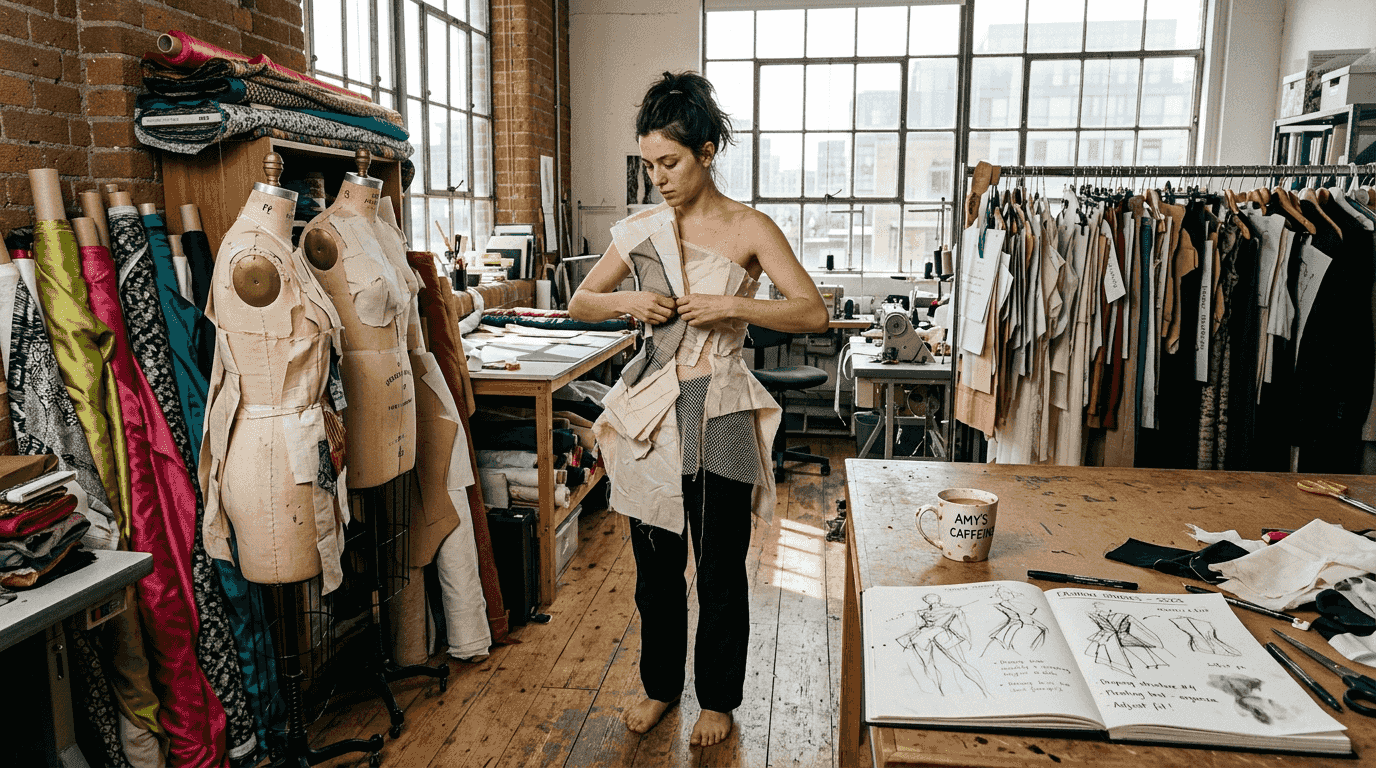
Most people dismiss fashion as superficial commerce, a cycle of trends driven by profit rather than purpose. Yet this view ignores how fashion operates as a powerful visual language that shapes identity, challenges social norms, and preserves cultural memory. Fashion designers create wearable narratives that communicate emotion and ideology as effectively as any canvas or sculpture. This article examines the artistic foundations of fashion, profiles revolutionary designers who transformed garments into conceptual statements, and reveals why collectors now treat iconic pieces as museum-grade art.
Table of Contents
- Understanding Fashion's Artistic Foundations
- Iconic Designers Who Redefined Fashion As Art
- Fashion's Role In Cultural Identity And Collector Value
- Discover Iconic Fashion Pieces At Piece Atelier
Key takeaways
| Point | Details |
|---|---|
| Fashion as visual expression | Fashion combines aesthetics with identity formation and social communication like traditional fine arts. |
| Validated artistic framework | Contemporary scholarship uses a robust 7-step model with 14 criteria to objectively assess fashion's artistic merit. |
| Revolutionary designers | Kawakubo, Mugler, and Schiaparelli broke conventional boundaries to establish fashion as legitimate cultural critique. |
| Collectible cultural artifacts | Auction houses sell iconic fashion pieces for record prices, recognizing their status as wearable art. |
| Identity and narrative | Fashion conveys emotion, ideology, and personal story through visual design and material choices. |
Understanding fashion's artistic foundations
Fashion occupies a unique position among creative disciplines because it merges aesthetic contemplation with physical embodiment. Unlike a painting viewed from a distance, fashion exists on the body, creating a dynamic relationship between wearer, observer, and cultural context. This embodied nature historically marginalized fashion within philosophical discourse, yet it actually enriches fashion's artistic potential by adding layers of performance and personal narrative.
Contemporary scholarship addresses this gap through systematic frameworks. A contemporary fashion criticism model was developed and validated to evaluate fashion using seven distinct phases and 14 specific criteria. This model treats fashion criticism with the same rigor applied to painting or sculpture, examining elements like conceptual depth, technical execution, cultural resonance, and historical significance. The framework proves that fashion analysis can be as objective and sophisticated as any traditional art criticism.
Philosophers historically avoided fashion because its physical, worn nature challenged abstract aesthetic theories. Philosophical fear of fashion due to its embodiment reveals how traditional art theory struggled with creative work that demands bodily engagement rather than detached observation. This reluctance says more about philosophy's limitations than fashion's legitimacy.
Fashion aesthetics fundamentally shape how individuals articulate identity and signal group affiliation. A garment communicates social position, cultural values, and personal philosophy before a single word is spoken. This visual vocabulary operates similarly to how color theory functions in painting or composition works in music. Fashion creates meaning through silhouette, texture, proportion, and material choice.
The practice-based nature of fashion, what scholars call praxis, grounds its artistic value in lived experience rather than theoretical contemplation. Fashion becomes art through wearing, not just viewing. This distinguishes it from static art forms while expanding what we recognize as legitimate artistic expression.
Key elements that establish fashion as art:
- Conceptual frameworks that communicate ideas beyond function
- Technical mastery of materials, construction, and form
- Cultural commentary that reflects or challenges social values
- Historical significance that influences subsequent creative work
- Emotional resonance that provokes response in viewers and wearers
"Fashion is not something that exists in dresses only. Fashion is in the sky, in the street, fashion has to do with ideas, the way we live, what is happening." This perspective from Coco Chanel captures fashion's role as cultural mirror and creative force.
Iconic designers who redefined fashion as art
Certain designers transcended garment construction to create conceptual statements that challenged fundamental assumptions about beauty, the body, and fashion's purpose. These creators proved fashion could operate as cultural critique and philosophical inquiry.
Rei Kawakubo's work with Comme des Garçons systematically deconstructed fashion's commercial and aesthetic conventions across four distinct phases. Rei Kawakubo and the critique of fashion as conceptual art demonstrates how her collections challenged luxury culture, commodity fetishism, body idealization, and architectural assumptions about clothing. Her 1982 "Destroy" collection presented deliberately distressed, asymmetrical garments that rejected polish and perfection. Later collections like "Body Meets Dress, Dress Meets Body" (1997) added sculptural padding that distorted conventional silhouettes, forcing viewers to reconsider beauty standards and the relationship between fabric and flesh.
Thierry Mugler approached fashion as sculpture in motion, creating garments that transformed the human form into geometric statements. Thierry Mugler fused sculpture and storytelling in avant-garde fashion design through his use of architectural lines, dramatic proportions, and theatrical presentation. His designs incorporated materials like metal, plastic, and vinyl alongside traditional textiles, treating the body as an armature for three-dimensional art. Mugler's work referenced science fiction, automotive design, and insect anatomy, creating a visual language that existed between fashion, costume, and sculpture.
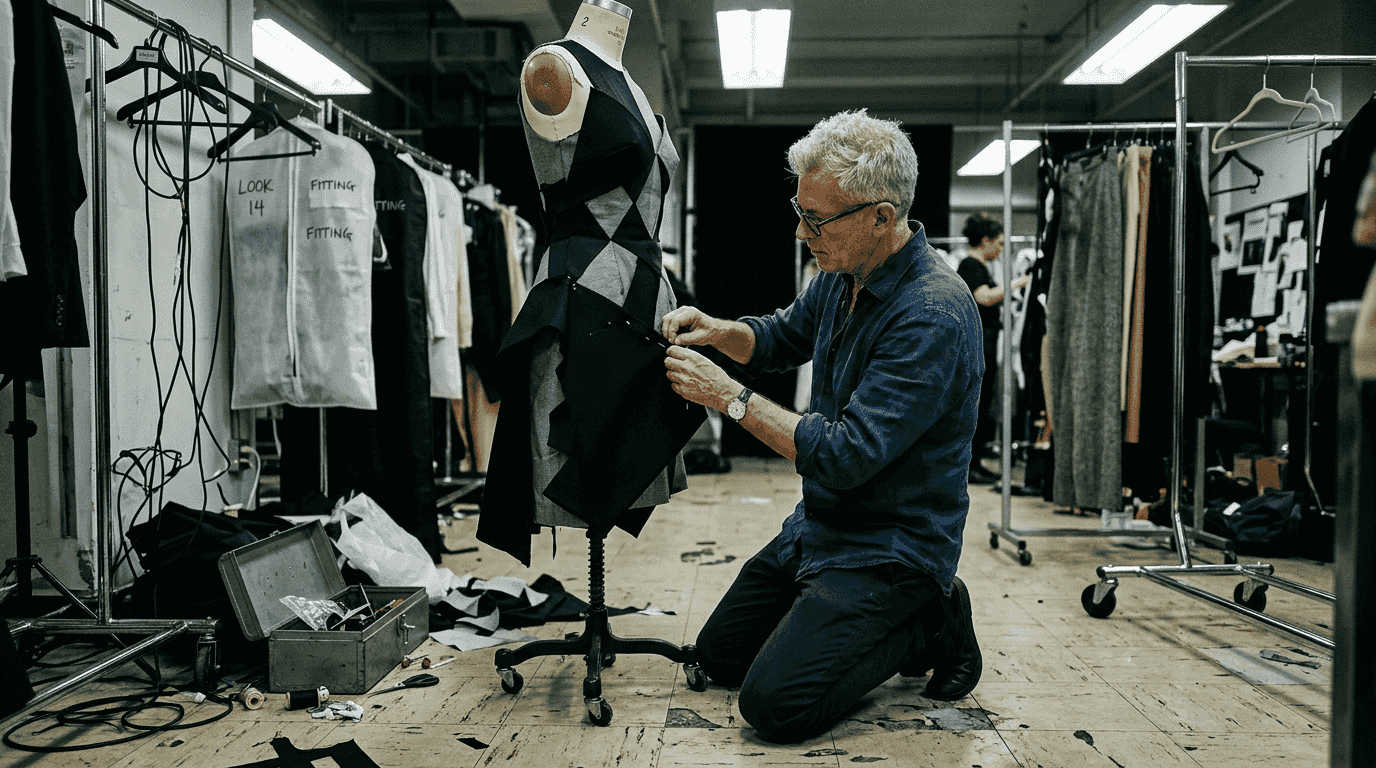
Elsa Schiaparelli's surrealist collaborations in the 1930s established direct connections between fashion and fine art movements. Elsa Schiaparelli's surrealist collaborations elevated fashion to artistic expression through partnerships with Salvador Dalí and Jean Cocteau. Her famous lobster dress, created with Dalí in 1937, placed a painted crustacean across a white evening gown, transforming haute couture into wearable surrealism. The skeleton dress, developed with Cocteau, used trompe-l'oeil embroidery to create anatomical imagery that was simultaneously morbid and elegant.
Revolutionary design approaches:
- Conceptual deconstruction that questions fashion's fundamental premises
- Material experimentation that expands beyond traditional textiles
- Silhouette manipulation that redefines body-garment relationships
- Cross-disciplinary collaboration between fashion and fine art
- Cultural provocation that challenges beauty standards and social norms
"In difficult times, fashion is always outrageous." Schiaparelli's observation explains how artistic fashion thrives by confronting rather than comforting, using shock and surprise as creative tools.
These designers share a willingness to prioritize artistic vision over commercial appeal, treating collections as conceptual statements rather than product lines. Their work demonstrates that fashion can function as cultural critique, philosophical inquiry, and visual poetry simultaneously.
Fashion's role in cultural identity and collector value
Fashion operates as both personal expression and cultural artifact, creating value that extends far beyond utility or seasonal trends. The pieces that achieve iconic status do so by capturing specific cultural moments while demonstrating exceptional artistic vision.
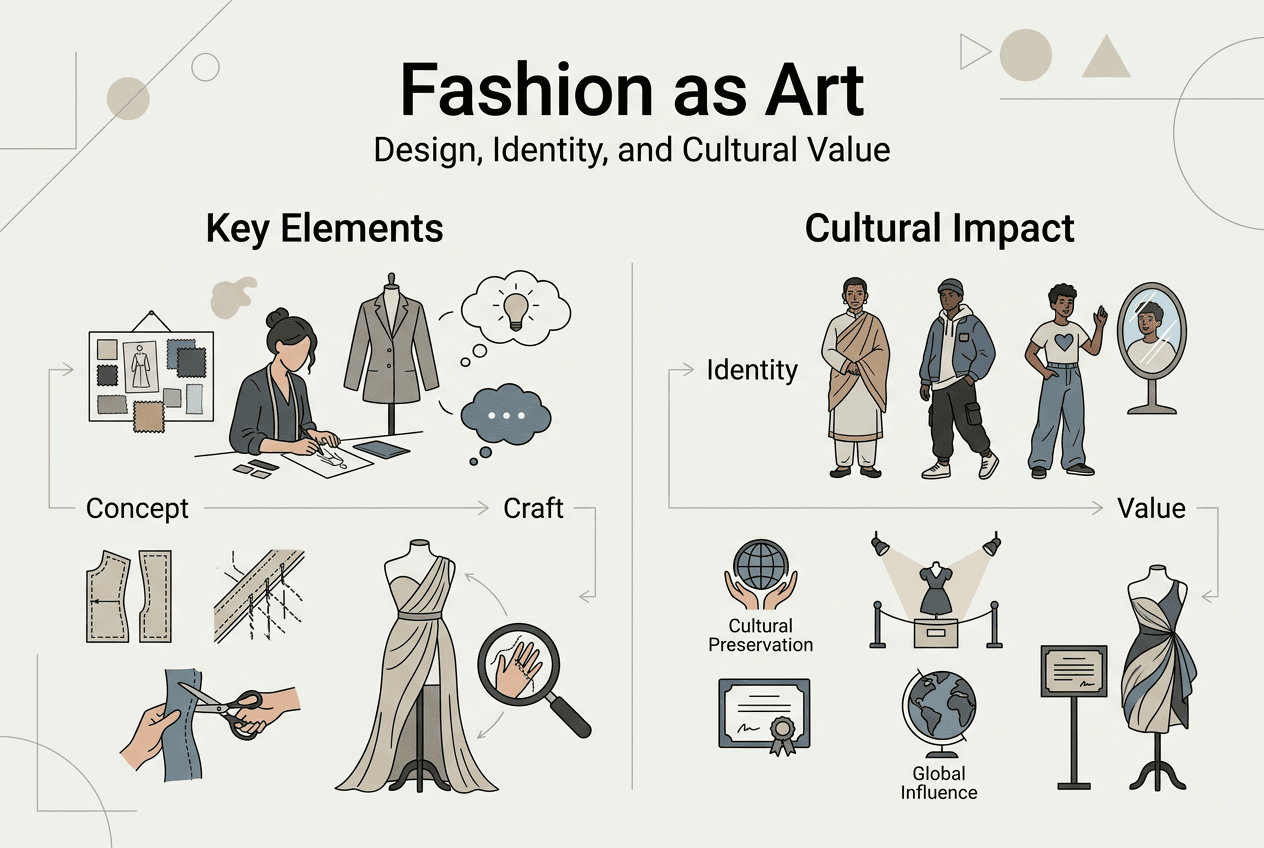
The aesthetics of fashion and identity articulation reveals how garment choices communicate complex social information and enable group formation. Fashion aesthetics allow individuals to signal affiliation with subcultures, professional communities, or ideological movements. A leather jacket carries different meanings depending on context: rebellion in 1950s America, luxury in contemporary fashion, professional uniform in certain industries. This semiotic richness makes fashion a sophisticated communication system.
Collectors increasingly recognize fashion's artistic legitimacy through market behavior. Historic couture auctions reflect fashion's recognition as museum-grade art with pieces selling for six and seven figures. These auctions treat garments with the same reverence as painting or sculpture, emphasizing provenance, condition, historical significance, and artistic merit. A Dior gown from the 1950s or a Kawakubo piece from a landmark collection becomes a tangible connection to fashion history and creative genius.
The emotional narrative embedded in iconic pieces heightens both cultural and market value. Couture garments represent hundreds of hours of handwork, rare materials, and singular creative vision. Unlike mass-produced items, these pieces exist as unique or extremely limited creations. The story of their creation, their appearance in significant cultural moments, and their connection to influential designers transforms them into cultural artifacts worthy of preservation.
| Fashion Art Attribute | Traditional Fine Art | Fashion Design |
|---|---|---|
| Physical medium | Canvas, bronze, marble | Textile, leather, unconventional materials |
| Viewer relationship | Observed from distance | Worn on body, experienced kinesthetically |
| Temporal nature | Generally permanent | Subject to wear, aging, preservation challenges |
| Cultural function | Aesthetic contemplation | Identity expression, social communication |
| Market recognition | Established for centuries | Rapidly growing since 1990s |
| Institutional validation | Museums, galleries, academies | Fashion museums, auction houses, scholarship |
Factors that establish collector value in fashion:
- Designer significance and influence on fashion history
- Rarity and production limitations of specific pieces
- Condition and preservation quality over time
- Provenance including previous ownership and exhibition history
- Cultural impact and recognition in media or popular culture
- Technical excellence in construction and material quality
Pro Tip: When evaluating fashion pieces as collectible art, prioritize items from collections that marked significant creative shifts or challenged prevailing aesthetics. A garment's value increases dramatically when it represents a designer's breakthrough moment or cultural turning point, not just brand prestige.
The intersection of personal identity and artistic value makes fashion unique among creative disciplines. You simultaneously appreciate a piece's aesthetic merit, wear it as personal expression, and preserve it as cultural artifact. This multidimensional relationship enriches both the collector experience and fashion's legitimacy as art.
Discover iconic fashion pieces at Piece Atelier
Understanding fashion's artistic foundations naturally leads to acquiring pieces that embody these principles. Piece Atelier curates collections that honor designer heritage and cultural significance, treating each item as a unique work worthy of preservation and appreciation.
The platform researches influential designers and identifies pieces that shaped fashion history, offering collectors access to garments with genuine cultural impact. Whether you seek a Louis Vuitton Pochette Citadine that represents luxury craftsmanship or pieces from the elegant women's dress wear collection that demonstrate timeless design principles, each item comes with the narrative context that elevates fashion to art.
Explore Piece Atelier to discover how acquiring iconic fashion connects you with artistic vision, cultural history, and exceptional craftsmanship. The platform transforms fashion appreciation into tangible ownership of wearable art.
Frequently asked questions
What defines fashion as an art form beyond aesthetics?
Fashion qualifies as art through conceptual depth, cultural commentary, technical mastery, and emotional resonance. Like painting or sculpture, fashion communicates ideas and challenges assumptions. The validated criticism model with 14 criteria proves fashion analysis can be as rigorous as traditional art evaluation.
How do designers like Rei Kawakubo change perceptions of fashion?
Kawakubo's work systematically deconstructs fashion conventions, treating collections as philosophical statements rather than commercial products. Her designs challenge beauty standards, body idealization, and luxury culture. By prioritizing concept over wearability, she establishes fashion as legitimate cultural critique and artistic expression.
Why are fashion pieces sold at auctions considered art?
Auction houses recognize iconic fashion as museum-grade art based on historical significance, creative vision, technical excellence, and cultural impact. Pieces from landmark collections or influential designers represent tangible connections to fashion history. Their rarity, provenance, and narrative value mirror fine art market dynamics.
How does fashion influence cultural identity?
Fashion aesthetics enable identity articulation and social group formation through visual communication. Garment choices signal affiliation with subcultures, professional communities, or ideological movements before verbal interaction. This semiotic function makes fashion a sophisticated language for expressing personal and collective identity.
What should collectors look for in fashion pieces as art?
Prioritize designer significance, historical impact, technical excellence, and cultural resonance. Seek pieces from collections that marked creative breakthroughs or challenged prevailing aesthetics. Verify provenance, assess condition, and understand the narrative context that establishes a garment's place in fashion history. Rarity and production limitations also enhance collectible value.
Recommended
- Le Cigarette Smoking von Yves Saint Laurent – Mode als kulturelles Sta – P´ièce Atelier
- Piece Atelier: Wo Kultur und Designer-Mode aufeinander treffen – P´ièce Atelier
- Beispielprodukte Elegante Kleidung für Damen – P´ièce Atelier
- Louis Vuitton – Vom Reisehersteller zur Monopolstellung im Luxusmarkt – P´ièce Atelier