
5 types of designer craftsmanship in luxury fashion
Luxury collectors often struggle to distinguish between different types of designer craftsmanship when building their collections. Understanding these distinctions transforms appreciation from surface aesthetics to recognizing the technical mastery and cultural significance embedded in each piece. This guide explores five essential craftsmanship types, providing you with clear criteria to evaluate quality, authenticity, and historical relevance. You'll learn to identify hand-stitching, embroidery, leatherworking, tailoring, and fabric manipulation techniques that define iconic designer pieces and inform smarter collecting decisions.
Table of Contents
- Criteria For Evaluating Designer Craftsmanship
- Hand-Stitching And Embroidery
- Leatherworking Craftsmanship
- Tailoring And Fabric Manipulation
- Comparing Craftsmanship Types: A Summary Table
- Explore Curated Designer Craftsmanship Collections
- Frequently Asked Questions About Designer Craftsmanship Types
Key takeaways
| Point | Details |
|---|---|
| Five major types | Hand-stitching, embroidery, leatherworking, tailoring, and fabric manipulation represent distinct craftsmanship categories in luxury fashion. |
| Cultural context matters | Each technique carries unique historical and cultural influences that enhance a piece's value beyond materials and labor. |
| Evaluation criteria | Assess craftsmanship through technique precision, material quality, design originality, and brand heritage. |
| Informed collecting | Understanding these differences empowers you to make confident acquisition decisions aligned with your collection goals. |
Criteria for evaluating designer craftsmanship
Before exploring specific craftsmanship types, you need a framework for evaluation. Evaluating craftsmanship involves examining technique, material quality, heritage, and cultural significance to distinguish exceptional work from standard production. Technique precision reveals the artisan's skill level through consistent stitching, clean finishing, and attention to minute details. Material quality directly impacts longevity and aesthetic appeal, with premium fabrics and leathers aging gracefully while inferior materials deteriorate quickly.
Design originality separates derivative work from innovative craftsmanship that advances the field. Brand heritage signals authenticity because established houses maintain rigorous standards across generations of artisans. Cultural and historical context add layers of meaning that transform functional garments into collectible artifacts. A piece that represents a pivotal moment in fashion history or embodies specific cultural traditions carries value beyond its physical construction.
Consider these evaluation factors when examining any designer piece:
- Consistency of technique throughout the garment or accessory
- Appropriate material selection for the intended design and function
- Evidence of hand finishing versus mass production shortcuts
- Documented connection to designer heritage or cultural movements
- Originality in execution that demonstrates mastery rather than imitation
Pro Tip: Examine interior construction and hidden seams to assess true craftsmanship quality, as these areas reveal whether artisans maintain standards even where consumers cannot see.
Your personal collecting preferences shape how you weight these criteria. Some collectors prioritize technical complexity while others value cultural significance or brand legacy. Understanding your own priorities helps you make consistent decisions that build a cohesive collection over time.
Hand-stitching and embroidery
Hand-stitching represents one of the most labor-intensive craftsmanship types in luxury fashion. Artisans spend hours creating tiny, consistent stitches that machines cannot replicate with the same precision and character. Each stitch requires individual attention, building strength and flexibility into seams while creating subtle texture variations that give handmade pieces their distinctive appearance. The technique stores generations of artisan knowledge in muscle memory and passed-down methods.
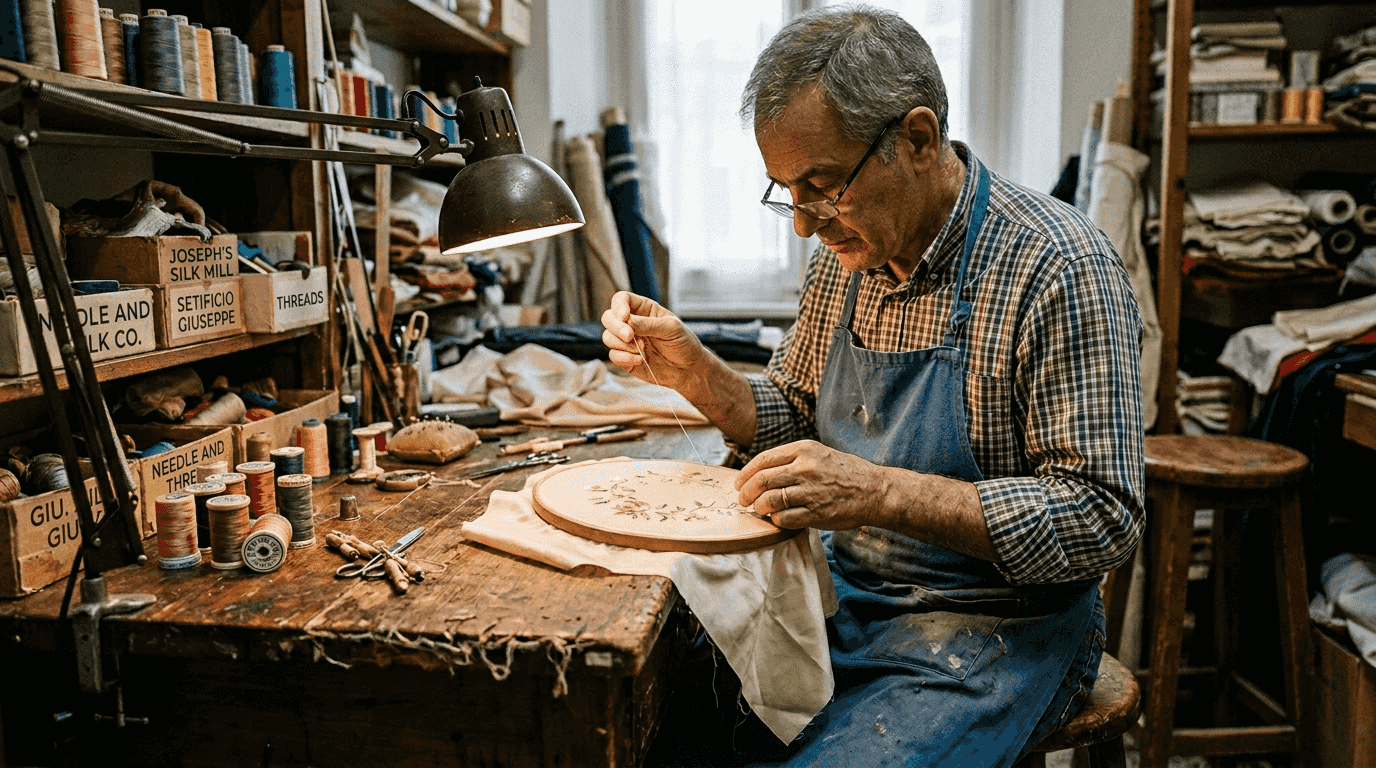
Embroidery elevates hand-stitching into pure artistry by creating decorative patterns, images, and textures on fabric surfaces. Hand-stitching and embroidery are signature techniques in luxury fashion with deep cultural meanings, often conveying stories, symbols, and traditions specific to regions or historical periods. Yves Saint Laurent famously incorporated embroidery to make cultural statements that challenged fashion conventions and elevated garments beyond mere clothing into wearable art.
Complex embroidered pieces can require weeks or even months to complete. A single evening gown might feature thousands of individual stitches creating intricate floral patterns, geometric designs, or figurative scenes. The time investment directly correlates with rarity and collectible value, as few artisans possess the skill and patience for this meticulous work.
Recognize quality hand-stitching and embroidery through these characteristics:
- Uniform stitch length and tension across the entire piece
- Thread color transitions that blend seamlessly in gradients
- Dimensional effects created through layered stitching techniques
- Durability in stress points where hand-stitching outlasts machine work
- Cultural motifs executed with authentic technique rather than approximations
Pro Tip: Turn embroidered pieces inside out to examine thread management and knot placement, as skilled artisans minimize bulk and secure threads invisibly without compromising the front appearance.
When evaluating embroidered pieces, research the specific techniques used to understand their cultural origins and technical difficulty. French knots, satin stitching, and couching each require different skill levels and produce distinct visual effects that contribute to a piece's overall impact and value.
Leatherworking craftsmanship
Leatherworking stands as a cornerstone of luxury accessories, transforming raw hides into durable, beautiful products that improve with age. The process begins with leather selection, where artisans evaluate grain patterns, thickness, and natural characteristics that determine the final product's quality and longevity. Tanning methods critically affect how leather feels, smells, and responds to use over decades. Vegetable tanning produces firm, long-lasting leather that develops rich patina, while chrome tanning creates softer, more pliable materials suitable for different applications.
Cutting techniques separate master craftspeople from novices. Hand-cutting allows artisans to work around natural imperfections and optimize grain direction for strength and appearance. Expert leather workers visualize the three-dimensional final product while cutting two-dimensional patterns, accounting for stretch, compression, and assembly requirements. Stitching techniques in leatherwork demand specialized skills because thick materials require different approaches than fabric, with saddle stitching providing superior strength and aesthetic appeal compared to machine alternatives.
Leatherworking craftsmanship defines the quality and status of luxury handbags and accessories, with Louis Vuitton's meticulous approach transforming the brand into a market leader. Their craftspeople spend years mastering techniques that ensure each piece meets exacting standards for durability and refinement. Embossing, edge finishing, and hardware attachment require additional specialized knowledge that distinguishes exceptional work from adequate construction.
Quality leatherwork exhibits these hallmarks:
- Consistent edge finishing with smooth, sealed surfaces
- Symmetrical stitching with appropriate thread weight for leather thickness
- Hardware attachment that distributes stress without tearing
- Grain selection that enhances rather than hides natural leather character
- Construction methods that allow the piece to age gracefully
Collectors prize well-crafted leather pieces because they develop unique character through use while maintaining structural integrity for generations. A quality leather bag from the 1960s can remain fully functional today, its patina telling the story of its journey while demonstrating the enduring value of expert craftsmanship.
Tailoring and fabric manipulation
Tailoring represents the intersection of technical precision and artistic vision in creating garments that fit perfectly and flatter the wearer's form. Master tailors understand body mechanics, fabric behavior, and construction sequences that transform flat textiles into three-dimensional sculptures. The craft requires years to develop proficiency in pattern drafting, fitting adjustments, and hand-finishing techniques that machines cannot replicate. Each body presents unique challenges that tailors address through strategic seam placement, dart positioning, and fabric manipulation.
Tailoring techniques embody both functional and artistic skill in designer fashion, creating garments that move naturally while maintaining their intended silhouette. Canvas interfacing, pad stitching, and hand-sewn buttonholes represent traditional techniques that provide structure, flexibility, and longevity superior to fused or machine alternatives. These methods require significant time investment but produce garments that retain their shape through decades of wear.
Fabric manipulation techniques expand creative possibilities beyond cutting and sewing. Pleating creates texture and movement through precise folding and heat-setting processes. Draping allows designers to work directly with fabric on dress forms, discovering organic shapes and proportions that emerge from the material's natural properties. Quilting combines layers for warmth, structure, or decorative effect through strategic stitching patterns. Smocking gathers fabric into elastic, textured surfaces that provide both aesthetic interest and functional stretch.
Compare tailoring and fabric manipulation impacts:
- Tailoring focuses on fit precision and structural integrity for classic silhouettes
- Fabric manipulation emphasizes texture, volume, and innovative forms that challenge conventional shapes
- Tailoring requires extensive fitting and adjustment for individual bodies
- Fabric manipulation often works with standardized techniques applied uniformly across sizes
- Tailoring ages through subtle shape retention and quality finishing
- Fabric manipulation creates immediate visual impact through surface interest
Pro Tip: Examine garment interiors to identify hand-tailoring through floating canvas, hand-felled seams, and individually attached linings that move independently from outer fabrics.
Recognizing subtle differences in tailoring quality enhances your ability to identify pieces worthy of collection investment. A well-tailored jacket maintains its shape on a hanger, shows no puckering at seams, and features buttons that align perfectly when fastened. These details signal craftsmanship that justifies premium pricing and long-term value retention.
Comparing craftsmanship types: a summary table
Understanding how different craftsmanship types compare helps you identify which techniques align with your collecting priorities and aesthetic preferences. Comparison tables help collectors understand craftsmanship distinctions to inform purchase decisions by highlighting relative strengths, time investments, and cultural significance of each approach.
| Craftsmanship Type | Technique Complexity | Time Investment | Cultural Significance | Collectible Appeal |
|---|---|---|---|---|
| Hand-stitching | High precision, requires years of practice | Hours to days per garment | Preserves traditional methods across cultures | Strong for pieces showing visible craftsmanship |
| Embroidery | Extremely high, combines technical and artistic skill | Days to months for complex pieces | Deep cultural roots in regional traditions | Exceptional for rare, culturally significant work |
| Leatherworking | Moderate to high, material-specific knowledge | Hours to days depending on complexity | Linked to heritage brands and functional luxury | Very strong, especially with patina development |
| Tailoring | High, requires body knowledge and fitting expertise | Days for bespoke pieces with multiple fittings | Represents European sartorial traditions | Strong for classic pieces from renowned tailors |
| Fabric Manipulation | Moderate to high, technique-dependent | Varies widely by method | Often connects to avant-garde movements | Growing, particularly for innovative designers |
Each craftsmanship type offers distinct advantages for collectors:
- Hand-stitching provides durability and visible artisan skill
- Embroidery delivers maximum artistic expression and cultural storytelling
- Leatherworking ensures longevity and develops character through use
- Tailoring creates personalized fit and timeless elegance
- Fabric manipulation enables innovative forms and textural interest
Your collection focus determines which types deserve priority. Heritage-focused collectors might emphasize embroidery and hand-stitching for their cultural connections. Practical collectors who wear their pieces regularly might prefer tailoring and leatherworking for their durability. Avant-garde enthusiasts often gravitate toward fabric manipulation for its innovative possibilities.
Consider how different craftsmanship types complement each other within a collection. A well-rounded collection might include hand-stitched couture gowns, embroidered cultural pieces, expertly tailored suits, quality leather accessories, and fabric-manipulated statement pieces. This diversity demonstrates comprehensive appreciation while providing wearing options for various occasions and moods.
Explore curated designer craftsmanship collections
Now that you understand the distinct qualities of each craftsmanship type, you can explore pieces that embody these techniques firsthand. Piece Atelier curates luxury items specifically chosen for their exceptional craftsmanship, cultural significance, and designer heritage. Each piece comes with detailed provenance and context that connects you to the artisan traditions and historical moments that shaped its creation.

Discover iconic pieces like the Louis Vuitton Pochette Citadine, which showcases the leatherworking excellence that built the brand's reputation. Explore the elegant womens dress wear collection featuring tailoring and fabric manipulation techniques from influential designers. These curated selections provide authentic access to craftsmanship that transforms fashion into collectible art, allowing you to build a collection that reflects both personal style and informed appreciation for designer heritage.
Frequently asked questions about designer craftsmanship types
What is the difference between craftsmanship and design in luxury fashion?
Craftsmanship refers to the technical skill and physical processes artisans use to create garments and accessories, including cutting, stitching, finishing, and material manipulation. Design encompasses the conceptual and aesthetic decisions about form, proportion, color, and style that define how a piece looks and functions. Exceptional luxury pieces unite both elements, with innovative design executed through masterful craftsmanship. Understanding this distinction helps you evaluate whether a piece succeeds on technical merit, creative vision, or both dimensions that together create lasting value.
How can I verify the authenticity of craftsmanship on a designer piece?
Examine stitching consistency, material quality, and finishing details that reveal production methods and care level. Authentic craftsmanship shows uniform stitch length, clean seam finishing, and appropriate construction techniques for the garment type. Request documentation of brand heritage, production dates, and provenance that connects the piece to verified designer output. Consult expert appraisers who specialize in the specific designer or era to confirm authenticity through construction details, materials, and design elements that counterfeiters typically miss or execute poorly.
How long does it typically take to create handcrafted luxury pieces?
Time investment varies dramatically by technique and complexity. Hand-stitched garments require hours to days depending on construction details and finishing requirements. Embroidered pieces can take days to months when artisans create intricate patterns with thousands of individual stitches. Tailored garments need days to weeks including multiple fittings and adjustments for perfect fit. Leatherwork ranges from several hours for simple accessories to days for complex bags with detailed finishing. This time investment directly contributes to rarity and value in the luxury market.
Does the cultural significance of craftsmanship affect a piece's resale value?
Yes, pieces embodying significant cultural or historical craftsmanship typically command higher resale prices than technically similar items without this context. Collectors actively seek pieces that represent pivotal fashion moments, preserve endangered techniques, or connect to specific cultural traditions. This demand creates premium pricing for items with documented heritage and authentic execution of culturally significant methods. Rarity amplifies this effect, as fewer artisans master traditional techniques each generation, making existing examples increasingly valuable to collectors who appreciate both aesthetic and historical dimensions of luxury fashion.
Recommended
- Louis Vuitton – Vom Reisehersteller zur Monopolstellung im Luxusmarkt – P´ièce Atelier
- Piece Atelier: Wo Kultur und Designer-Mode aufeinander treffen – P´ièce Atelier
- Le Cigarette Smoking von Yves Saint Laurent – Mode als kulturelles Sta – P´ièce Atelier
- Louis Vuitton Pochette Citadine – P´ièce Atelier